RG Richardson City Guides

RG Richardson City Guides
Interactive city travel.

Sobeys, Loblaw under fire for maple washing

 Sobeys, Loblaw under fire for maple washing, as Sobeys ditches maple leaf symbol in stores | CBC News


Sobeys, Loblaw under fire for maple washing, as Sobeys ditches maple leaf symbol in stores
Federal regulator has identified 127 cases of maple washing by retailers since the start of 2025


Sophia HarrisAndreas Wesley · CBC News · Posted: May 14, 2026 1:00 AM PDT | Last Updated: 6 hours ago

Listen to this article
Estimated 6 minutes

Sobeys customer Steve Palmer discovered these walnuts at a store in Nova Scotia. Although the packaging says the nuts come from California, they were promoted in-store with a red maple leaf. (Submitted by Steve Palmer)

More than a year after the Buy Canadian movement took root, grocery giants Loblaw and Sobeys are facing increased scrutiny over "maple washing" — the practice of promoting imported goods as homegrown.

The Canadian Food Inspection Agency (CFIA) slapped two Loblaw-owned stores in January with $10,000 fines each for maple washing, and one month later, two other Loblaw-owned stores got formal warnings for the same violation, CBC News has learned.

Sobeys is also on the CFIA's radar. The federal food regulator told CBC it has received multiple complaints about the grocer and maple washing and has wrapped up an investigation into advertising practices overseen by Sobeys' head office.

The probe resulted in no fines because "corrective actions" were taken, the CFIA said in an email.

Meanwhile, Sobeys appears to have phased out the iconic red maple leaf symbol it introduced last year to highlight Canadian products in stores.

Over the past two weeks, CBC visited nine Sobeys and Sobeys-owned Safeway locations in Halifax, Toronto, Calgary and Vancouver. We found the once-ubiquitous symbol had all but disappeared, leaving products such as Tim Hortons coffee and Real Dairy ice cream with no store marker to flag their Canadian connection.

The photo on the left shows the red maple leaf symbol Sobeys typically included on the shelf tag for products with Canadian ties, such as Tim Hortons coffee. In the photo on the right, taken last week at a Toronto Sobeys, the symbol has been removed. (Sobeys/Facebook, Sophia Harris/CBC)

Sobeys did not respond to requests for comment. But the grocer's parent company, Empire, told The Canadian Press in late March that it was starting to remove some Canadian signage because shoppers are capable of figuring out where their food comes from.

Consumer advocate Jay Jackson suggests the CFIA investigation — which was already underway in March — may have motivated the grocer to ditch the symbol.

"They know that the government is watching closer," said Jackson, a former senior analyst with Canada's Competition Bureau.

"They are trying to protect themselves."

The photo on the left shows the red maple leaf symbol Sobeys included on the shelf tag for Real Dairy ice cream. In the photo on the right, taken last week at a Toronto Sobeys, the symbol has been removed. (Sobeys/Facebook, Sophia Harris/CBC)

As maple-washing cases mount, Jackson says fed up shoppers are demanding the CFIA crack down hard on grocers that break the rules.

"The public, I think, is probably secretly furious about misrepresentation, especially when it comes to made in Canada claims," he said.

"I do believe they expect higher fines, more enforcement."

However, fines for maple washing have been rare.

Since the start of 2025, the CFIA has identified 127 cases where retailers promoted imported food as Canadian. But so far, the agency has issued only two fines — the ones handed out to the Loblaw stores.
No fines for big grocers that promoted imported food as Canadian
California walnuts promoted as Canadian

The lack of penalties is disappointing for Steve Palmer. Over the past year, he's filed eight complaints with the CFIA about maple washing at one Loblaw store and two Sobeys-owned locations in southwest Nova Scotia.

"I am horrified with the length of time this has gone on that there's not a fine," said Palmer, a retired large-animal veterinarian.

His complaints include Egyptian oranges promoted at a Loblaw-owned Superstore with a "Product of Canada" claim and a red maple symbol, and California walnuts displayed with the same symbol at a Sobeys.

"There is nothing Canadian about these," said Palmer, holding a container of the walnuts, which states they're from California.

"I do want the fraudulent labelling to stop."

Palmer holds a container of walnuts he bought at a Sobeys store in Nova Scotia. The container says the nuts are from California, but Palmer discovered them promoted in a Sobeys store last year with a red maple leaf symbol. (Dave Laughlin/CBC News)

According to email correspondence between Palmer and the CFIA, both the orange and nut issues have been resolved, but a CFIA inspector had to follow-up at least twice with the Sobeys store to get action.

Palmer says a lack of enforcement signals to retailers that they can ignore labelling rules with little consequence.

The CFIA is telling grocers, "'Don't worry, just go ahead and do it, and eventually we might say stop,'" he said.
Loblaw gets warnings for mislabelled veggies

Federal regulations state that food labels and in-store signage must be accurate and not misleading.

On Tuesday, CFIA spokesperson Patrick Girard told CBC News in an email that the agency issues fines based on a "range of considerations," including the degree of risk and possible harm and the track record of the offender.

In January, the CFIA handed $10,000 fines to two Toronto-based, Loblaw-owned stores — a Superstore and a Fortinos — for misrepresenting foreign food as Canadian.
MarketplaceThink you're buying Canadian at the grocery store? That product may actually be from the U.S.

In February, the CFIA issued warnings but no fines to two other Loblaw-owned stores, a Dominion in Newfoundland and Labrador and a Superstore in Nova Scotia.

At the Superstore, Mexican bell peppers were promoted with signage that read, "grown in Canada from your farmers." Green onions grown in California were also promoted as domestic.

At the Dominion store, President's Choice cocktail tomatoes from the U.S. were displayed with a maple leaf symbol and a "product of Canada" claim.
WATCH | Some foods might seem Canadian, even if they aren't:
Loblaw apologizes

Under federal rules, "product of Canada" means the food item is entirely or almost entirely produced within the country.

"It seems like they're going backwards," Jackson said of the CFIA's decision to hand out warnings rather than fines.

The CFIA said that fines are issued on a case-by-case basis and "can result in different enforcement outcomes" for similar violations.

The agency said fines are just one enforcement tool, along with education and business licence suspensions.

Loblaw said in an email that it's committed to accurate labelling, but that the task can be challenging when dealing with mass inventory from constantly changing suppliers.

Canada's largest grocer apologized for the mislabelled food, saying it's reinforcing store procedures "to help prevent this from happening again."
What about higher fines?

Shoppers like Palmer are calling for tougher enforcement. However, under the Safe Food for Canadians Act, the maximum penalty the CFIA can issue is $15,000 per violation.

By contrast, businesses face fines of up to $10 million under Canada's Competition Act — sometimes more — for a first offence of misleading advertising.
CBC InvestigatesCBC investigation finds grocers Loblaw, Sobeys overcharging for underweight meat — again

"I would very much appreciate CBC reaching out and publicly asking the Competition Bureau to explain why maple washing is not being investigated and enforced under the Competition Act," Palmer said.

CBC did just that. Spokesperson Marianne Blondin responded in an email that the bureau "can" become involved in such cases. However, she didn't directly answer a question about why it doesn't appear to be involved in current maple-washing cases.

She did, however, note that not all the Competition Bureau's work is made public.

Blodin encouraged Canadians to file a complaint with the Competition Bureau if they uncover misleading advertising.

Shoppers can also submit one to the CFIA — if it's food-related.

ABOUT THE AUTHOR


Sophia Harris

Business Reporter

Based in Toronto, Sophia Harris covers consumer and business for CBC News web, radio and TV. She previously worked as a CBC videojournalist in the Maritimes, where she won an Atlantic Journalism Award for her work. Got a story idea? Contact: sophia.harris@cbc.ca

Has the chic luggage race peaked?

 Has the chic luggage race peaked?

Stack of Rimowa suitcases

VCG/Getty Images

The next trendy suitcase better have a built-in television or some other ridiculous feature, because the market is getting crowded.

Sign of the times. The popular DJ John Summit made an Instagram post in which he kicks, throws, hammers, and lights his Rimowa suitcase on fire—ostensibly because he’s fed up after pieces from the luxury brand broke down on him. Then the comments section took off:

  • “We’ve been summoned,” wrote Away, the startup that kicked off the modern-day case race in 2015. More affordable than Rimowa and Tumi, but prettier than Samsonite, Away reached a $1.4 billion valuation in four years and opened the D2C suitcase floodgates.
  • “Please let me send you some @beis luggage,” the actress Shay Mitchell commented. She founded Béis in 2018. One of its latest collaborations was with Rare Beauty, Selena Gomez’s cosmetics brand.
  • Tumi and Samsonite also chimed in on Summit’s post. Samsonite owns Tumi, having bought the brand for $1.8 billion in 2016—the same year that LVMH bought airport status symbol Rimowa.

Overall, legacy brands like Samsonite, Tumi, and Rimowa still command the baggage carousel, but the new players are making inroads. “We’re all fighting to steal market share from Samsonite, which owns 25% of the market, and LVMH, which owns another 10%,” the co-founder of July, an Australian luggage brand, told Fast Company. One of the latest upstarts to vie for some cargo space is Casetify, a phone case company that launched its first suitcase in 2024.

The restaurant industry’s breaking point has arrived - Victoria Times Colonist

The restaurant industry’s breaking point has arrived - Victoria Times Colonist

Comment: The restaurant industry’s breaking point has arrived
Many restaurants are simply charging more while serving fewer customers.
Sylvain Charleboisabout 4 hours ago


Patrons dine on a patio on King Street in Toronto. Evan Buhler, The Canadian Press

Listen to this article
00:07:05


A commentary by the director of the Agri-Food Analytics Lab at Dalhousie University in Halifax. He is co-host of The Food Professor Podcast and a visiting scholar at McGill University in Montreal.

Canada’s restaurant industry is often treated as a symbol of resilience. Through inflation, lockdowns, labour shortages and supply chain disruptions, restaurateurs have somehow kept the lights on.

But beneath the surface of the latest sales numbers lies a much darker reality: the economics of operating a restaurant in Canada are becoming increasingly untenable.

This year, the Agri-Food Analytics Lab forecast that Canada could experience a net loss of roughly 4,000 restaurants in 2026. At the time, some dismissed the estimate as overly pessimistic. Today, it looks increasingly plausible.

The latest Canadian Restaurant Intelligence Report from Restaurants Canada confirms what many operators already know intuitively: sales might still be growing, but profitability is collapsing.

Seventy-one per cent of restaurant operators report lower profitability so far in 2026. More than one-third are operating at a loss or merely breaking even.

In the quick-service sector, the numbers are even worse. Fifty-seven per cent of operators in that category are either losing money or barely surviving.

This is not a healthy industry.

The problem is that top-line sales figures continue to mask structural deterioration. Nominal sales growth means little when operators are simultaneously facing soaring labour costs, higher food prices, rising insurance premiums, elevated energy bills and softening consumer demand.

Many restaurants are simply charging more while serving fewer customers.

That distinction matters. Canada is experiencing what economists call a “K-shaped economy.”

Higher-income households continue to spend, dine out and pursue premium experiences. Fine dining and full-service restaurants are benefiting from that trend. Meanwhile, middle- and lower-income consumers are pulling back sharply, especially in the quick-service segment where affordability once provided protection during downturns.

Historically, fast-food chains performed well during periods of economic stress because consumers traded down from casual or upscale dining. That pattern has now broken.

Canadians struggling with rent, mortgages, fuel costs and groceries are increasingly questioning whether even a combo meal is worth the cost. The result is a bifurcated market where affluent consumers sustain parts of the industry while the broader foundation weakens underneath.

The provincial numbers tell the story clearly.

Alberta is leading the country with real food service sales growth of 8.6%, supported by strong in-migration and relatively resilient economic conditions. Manitoba posted an eye-catching 13.7% increase, although part of that reflects a weak comparable period last year. British Columbia and Saskatchewan both recorded 3.3% growth, while Nova Scotia came in at 3.1%.

But much of Central and Atlantic Canada is stagnating or declining. Ontario, the country’s largest restaurant market, saw real sales fall by 0.1%, while Quebec declined by 0.4%. New Brunswick barely remained positive at 0.2%. Newfoundland and Labrador recorded a 0.7% decline, and Prince Edward Island posted the weakest result nationally at -1.2%.

These numbers matter because restaurants are deeply tied to local economic confidence. Weak restaurant performance often reflects broader financial stress among households. And the pressure is not temporary.


The industry faces a convergence of structural headwinds rarely seen all at once. Oil prices have surged due to instability in the Middle East.

Fertilizer markets remain volatile. Immigration growth is slowing dramatically, weakening population-driven demand growth.

Trade uncertainty surrounding CUSMA continues to weigh on business confidence. Meanwhile, restaurants remain trapped between two unforgiving realities: Consumers cannot absorb much more inflation, but operators cannot absorb much more cost escalation.

This is why many restaurant owners are no longer talking about profitability. They are talking about survival.

Across the country, operators are cutting staff hours, delaying equipment upgrades, postponing renovations and shelving expansion plans.

Others are reducing portion sizes, simplifying menus or relying increasingly on bundled “value” offerings just to maintain traffic.

More than half of operators have already reduced staffing levels or employee hours in response to uncertainty.

These are not signs of a growing industry. They are signs of defensive positioning.

Independent restaurants are particularly vulnerable. Chains can leverage economies of scale, centralized purchasing and stronger access to financing.

Independents have fewer buffers. They remain culturally vital to communities across Canada, but many are operating with almost no margin for error.

And closures rarely happen dramatically. Restaurants seldom disappear all at once. The decline is gradual.

One owner delays replacing equipment. Another cuts lunch service. Another stops taking a salary. Eventually, exhaustion and cash flow realities prevail.

That is how industries contract. What makes this especially concerning is that foodservice plays a larger role in Canada’s economy than many realize.

Restaurants are deeply connected to agriculture, manufacturing, logistics, tourism and employment. When restaurants weaken, the effects ripple throughout the entire agri-food chain.

This is no longer just a hospitality story. It is an affordability story. A labour story. A food inflation story. A confidence story.

Canada’s restaurant sector proved remarkably resilient during the pandemic. But resilience is not infinite.

At some point, margins disappear, debt accumulates, and consumer demand weakens enough that recovery becomes mathematically difficult.

The question is no longer whether Canada’s restaurant industry is under stress. The question is how many operators will still be standing by the end of 2026.

Private-taxi-for-your-burrito app adds hotel bookings

 Private-taxi-for-your-burrito app adds hotel bookings

Uber taxi sign

Jakub Porzycki/Getty Images

Nothing says cultural immersion like ordering Uber Eats to the accommodation you booked through Uber while you’re Ubering there from the airport. This scenario became reality yesterday: Uber launched a hotel-booking feature for US users.

As part of the rideshare app’s latest effort to become an everything app:

  • A new hotel tab lets you book Expedia accommodations on the Uber app, with Vrbo rentals coming later this year.
  • Uber One subscribers can get discounts on bookings, including 10% back in Uber credits and up to 20% off some hotels.
  • Regular users can apparently also get deals. A Washington Post travel reporter without Uber One said she booked a discounted Hilton room that was slightly cheaper than it would’ve been through Booking.com, Hotels.com, or the Hilton website.

Back scratch: Expedia said it’ll add Uber ride bookings to its app in June. This partnership was a long time coming—Uber’s current CEO previously led Expedia in the 2000s and 2010s, and Uber reportedly considered buying Expedia in 2024.

Other assistant-like offerings announced yesterday include: OpenAI-powered voice booking for rides, a room service-like feature for hotel-door deliveries, and, for Uber Black customers, the option to request that drivers have coffee or food waiting for them.

Eilean Donan in Kyle of Lochalsh | Atlas Obscura

Eilean Donan in Kyle of Lochalsh | Atlas Obscura


Eilean Donan
The most iconic structure in Scotland has been home to bishops, colonels, and Sean Connery characters.
Kyle of Lochalsh, Scotland


Added By
Hannah Frishberg
ShareTweetEmail
Been Here?
2,065Been Here
Want to Visit?
3,647Want to go
Add to List
1,321Added to list


Eilean Donan Andrea Mucelli on Flickr


About


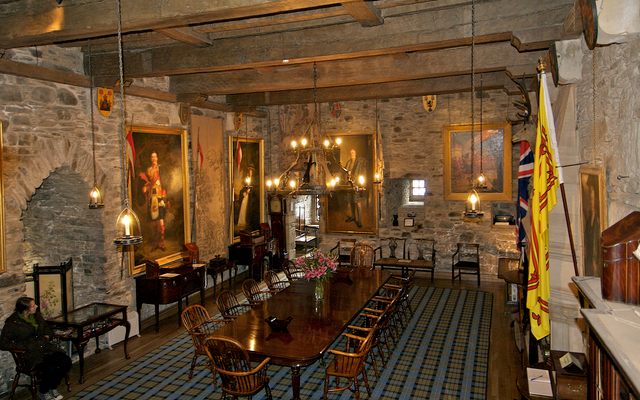
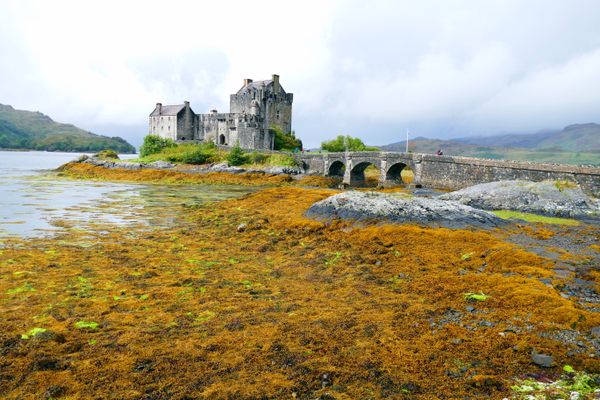
Having been featured in photos, ads, and films, the island fortesss known as Eilean Donan has spent centuries solidifying its position as the most iconic image of Scotland for natives and foreigners alike.

Built on an island a mile away from the Village of Dornie, the land was first occupied in 634 AD, home to the monastic cell of Bishop Donan. During the 13th-century Alexander II built the first incarnation of Eilean Donan to defend the surrounding mountains of Kintail and the Isle of Skye against the Viking hordes. This original castle is said to have an immense curtained wall connecting seven towers and spanning the entire island. Come 1719, a lesser-known Jacobite uprising partially destroyed the structure, and for the following 200 years, it lay in near ruins. Finally, in 1911, Colonel John MacRae-Gilstrap arrived. He bought the island and restored the castle, reopening it in 1932.

Jutting artfully from its island perch at the intersection of three lochs, the castle has been featured in a number of ad campaigns, television, and films, such as; The New Avengers (1976), Highlander (1986), and Entrapment (1999). As of 2021, the Internet Movie Database (IMBD lists 21 entries in which it was used as a location, beginning with "Bonnie Prince Charlie" starring David Niven in 1948. Today, what is deemed the fourth incarnation of the castle (the history of the second and third structures remains unknown) is still owned by the MacRae family, who run a tourist center and restaurant for those who care to venture into the Feudal folds of Scotland's history.

City guides

Author: R.G.Richardson This is a live interactive search guidebook with 12,300 presets that searches for everything about your city. Pick and click on the icon, never goes out of date! You can search for events, restaurants, banks, hotels, shopping, apartments and sports. Find everything that is happening in the city! In the guide book, you look in the index of what you want to search and then you click on the button next to it and you instantly have your search items displayed. All guides search in 10 languages.