RG Richardson City Guides

RG Richardson City Guides
Interactive city travel.

Eilean Donan in Kyle of Lochalsh | Atlas Obscura

Eilean Donan in Kyle of Lochalsh | Atlas Obscura


Eilean Donan
The most iconic structure in Scotland has been home to bishops, colonels, and Sean Connery characters.
Kyle of Lochalsh, Scotland


Added By
Hannah Frishberg
ShareTweetEmail
Been Here?
2,065Been Here
Want to Visit?
3,647Want to go
Add to List
1,321Added to list


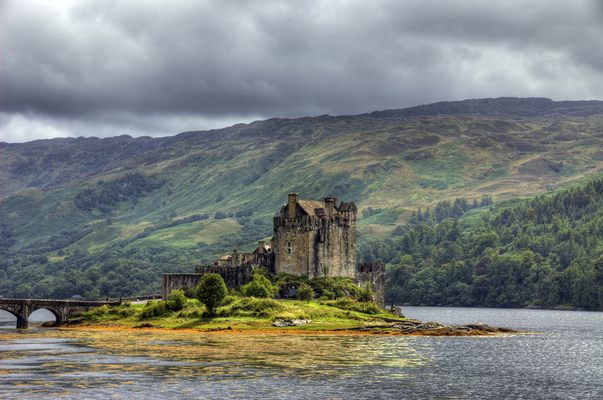
Eilean Donan Andrea Mucelli on Flickr


About


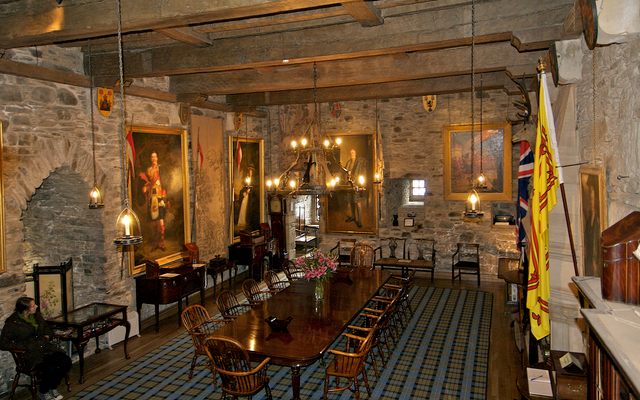
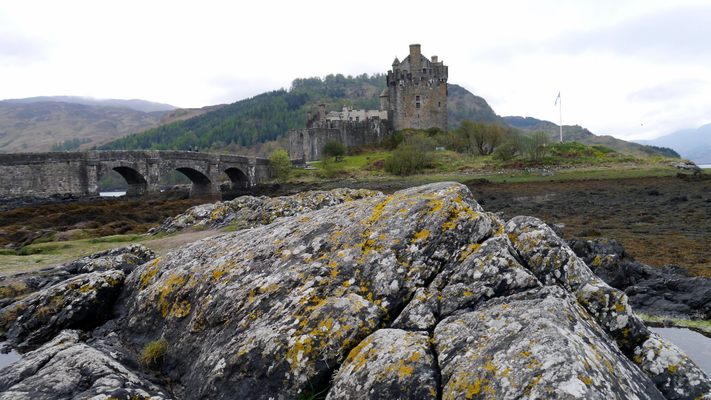
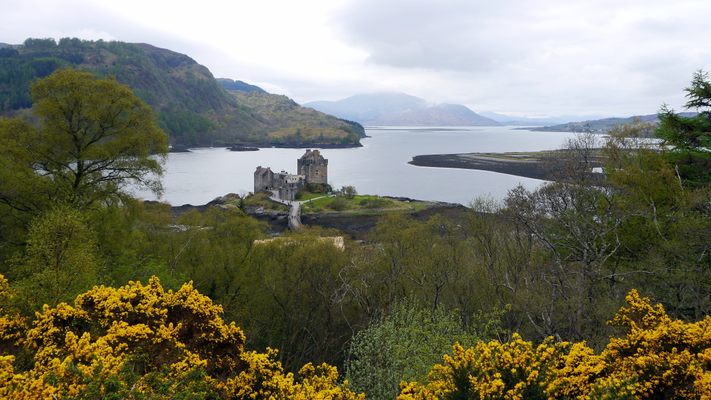
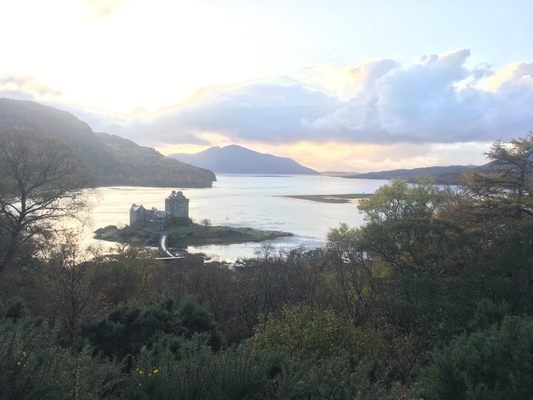
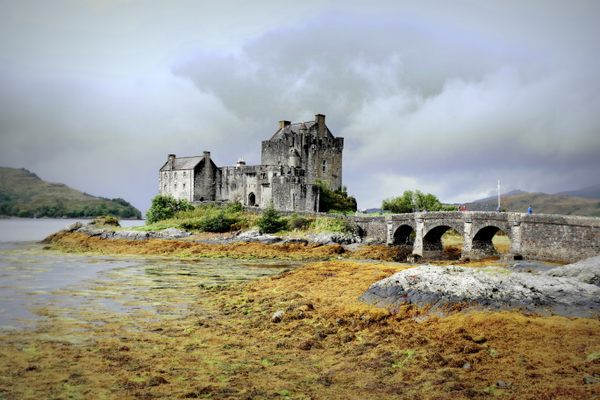
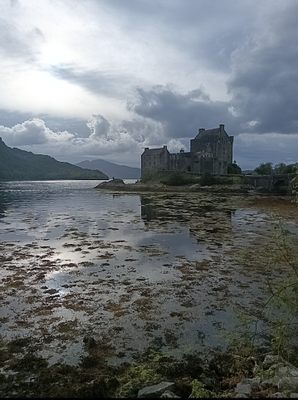
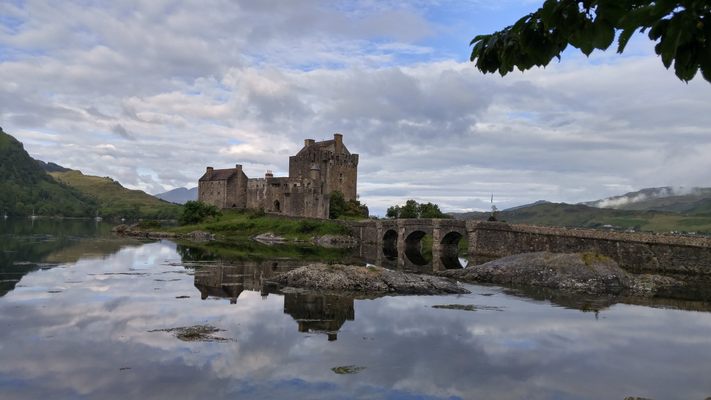
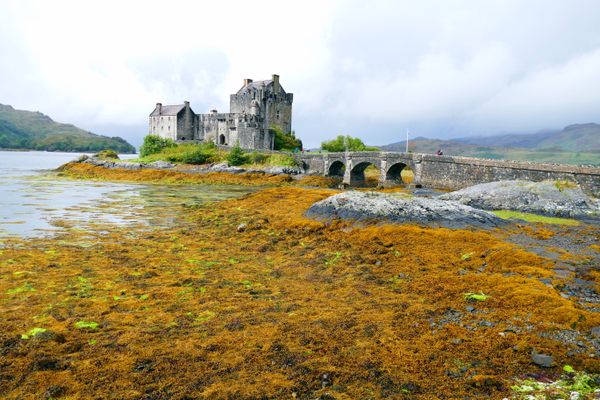
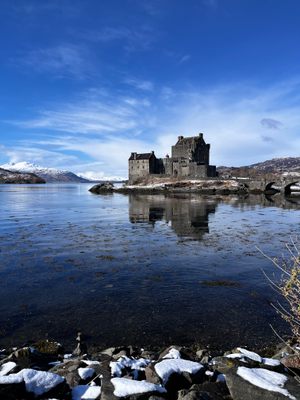
Having been featured in photos, ads, and films, the island fortesss known as Eilean Donan has spent centuries solidifying its position as the most iconic image of Scotland for natives and foreigners alike.

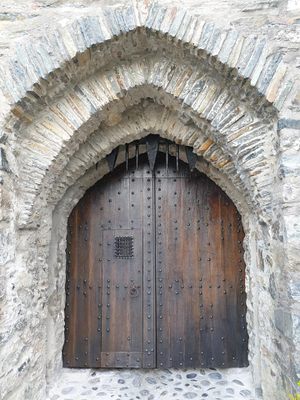
Built on an island a mile away from the Village of Dornie, the land was first occupied in 634 AD, home to the monastic cell of Bishop Donan. During the 13th-century Alexander II built the first incarnation of Eilean Donan to defend the surrounding mountains of Kintail and the Isle of Skye against the Viking hordes. This original castle is said to have an immense curtained wall connecting seven towers and spanning the entire island. Come 1719, a lesser-known Jacobite uprising partially destroyed the structure, and for the following 200 years, it lay in near ruins. Finally, in 1911, Colonel John MacRae-Gilstrap arrived. He bought the island and restored the castle, reopening it in 1932.

Jutting artfully from its island perch at the intersection of three lochs, the castle has been featured in a number of ad campaigns, television, and films, such as; The New Avengers (1976), Highlander (1986), and Entrapment (1999). As of 2021, the Internet Movie Database (IMBD lists 21 entries in which it was used as a location, beginning with "Bonnie Prince Charlie" starring David Niven in 1948. Today, what is deemed the fourth incarnation of the castle (the history of the second and third structures remains unknown) is still owned by the MacRae family, who run a tourist center and restaurant for those who care to venture into the Feudal folds of Scotland's history.

The kids aren’t hopeful

 The kids aren’t hopeful

frustrated woman sitting in front of computer

Maskot/Getty Images

On Tuesdays, the Brew’s Matty Merritt brings you the news you need to make life a little easier during your 9-5, 5-9, or OOO.

If you’re under 35 and roll your eyes when your parents talk about finding a job, know that you’re not alone in feeling exhausted by the hunt. Younger Americans are more pessimistic about the job market than older Americans, a sharp reversal from just a few years ago, according to a new Gallup World Poll:

  • As of 2025, just 43% of Americans aged 15-34 believe that it’s a “good time” to find a job where they live, compared with 64% of people 55 and older.
  • Historically, young people with their bright-eyed optimism have been more hopeful than older generations about the economy and job hunting.

The disconnect is real: In 2023, nearly 70% of 15- to 34-year-olds thought it was a good time to find a job. That means it dropped by 27 percentage points in just two years—comparable to the drop following the Great Recession in 2008. But back then, Americans of all ages felt disheartened, not just young people.

Colbert’s 11-year Late Show run ends tonight

 Colbert’s 11-year Late Show run ends tonight

Stephen Colbert

Scott Kowalchyk/CBS

Lord of the Rings and Neutral Milk Hotel enthusiast Stephen Colbert will host The Late Show for the final time tonight, ending an 11-year run at CBS after the network canceled the show for what it said were “purely financial” reasons. But many—including Colbert—believe the cancellation came at the behest of President Trump, a frequent target of the comedian’s jokes and ridicule.

The top-rated late-night show was informed of its fate last summer, shortly after CBS parent company Paramount settled a $20 billion lawsuit with Trump over its editing of a 60 Minutes interview with then-Democratic presidential candidate Kamala Harris. Colbert called the settlement a “big fat bribe.” Not long after, the FCC approved the Paramount-Skydance merger.

The future of late night: Network TV viewership has been down for everyone in the last decade, as younger audiences gravitate away from appointment TV viewing and toward online clips—something that networks have a hard time monetizing.

What’s next for Colbert? He is scripting a Lord of the Rings film for Warner Bros., a dream project for the longtime Tolkien nerd. He said he has no plans to get into politics, despite a mild endorsement from former President Barack Obama.

$50 for a movie ticket

 $50 for a movie ticket

A movie theater seat on a red carpet

Niv Bavarsky

Dinner and a movie? In this economy? We have reached the point where a date night with two movie tickets can run you $100—and that doesn’t even include popcorn. Regal Cinemas recently sold out in mere minutes for $50 tickets to see Dune: Part Three projected in 70 millimeter IMAX film over its December opening weekend, according to the Wall Street Journal, which notes it’s part of a larger premium movie ticket trend:

  • Last year, 17% of film tickets sold were for theaters with bigger screens and better sound (typically at a higher cost), compared with 13% in 2021.
  • Cinema-goers snap up seats in these theaters faster than others, so theater owners are building more of them. By the end of last year, AMC had 517, which is 30% more than the chain had in 2021.

But the WSJ says Hollywood studios aren’t sold on movie theaters going big on screens and prices, fearing that upcharging the most devoted cinephiles could backfire by turning a night at the movies from a bit of fun to a special occasion.

Beer is back on the menu, boys

  Beer is back on the menu, boys

Cartoonish illustration of a hand holding up a big beer mug

Niv Bavarsky

A proverbial ladybug just landed on the cracking-a-cold-one business: The number of drinks sold by Anheuser-Busch, the world’s largest brewer, increased last quarter for the first time in three years, the company reported yesterday, surprising analysts and suggesting that a broader chill in the beer industry may be thawing.

“Cheers to beer,” AB InBev CEO Michel Doukeris said of the promising results, which also included better-than-expected 12% revenue growth. Major gains in Latin American markets drove the beer beat:

  • The brewer’s Brazil unit notched record growth in sales volumes, sending shares of the Sao Paulo-listed subsidiary soaring by their most in almost 27 years.
  • AB InBev, which owns Corona and Modelo (except in the US), also exceeded expectations in Mexico, overtaking rival Heineken in the region.

But…that wasn’t enough to turn beer sales positive for the whole continent. In what could be interpreted by Big Ten students as a challenge, overall North American beer sales continued to fall, as persistent inflation and shifting health trends kept US shoppers away from the alcohol aisle.

Good thing AB InBev has expanded into beer that doesn’t get you drunk—revenue from its non-alcohol beverages jumped 27% in the quarter.

Sign of the imbibing times?

Along with AB InBev…

  • The Danish brewer Carlsberg recently reported that its beer volumes turned positive after rolling downhill last year.
  • Heineken’s total volumes also grew last quarter after falling in 2025, but the breakthrough was buoyed by sales of mixers and ciders. Heineken’s beer volumes actually fell from the same time last year.

Looking ahead…AB InBev said it’ll beat out both of those rivals this year. Much like other brewers, the company that slings Budweiser, Bud Light, Stella Artois, and Michelob Ultra—now the best-selling beer in the US—expects a significant summertime boost from World Cup festivities.

Ken Read to lead last-minute US charge for the America's Cup

Ken Read to lead last-minute US charge for the America's Cup

Ken Read to lead last-minute US charge for the America’s Cup

Toby Heppell
April 8, 2026
0shares


With Ken Read as CEO and American Magic’s AC75 in the shed, a 'new' US challenger enters the America's cup ring. But is one year enough to win?

TAGS:


After months of uncertainty regarding a US presence on the start line, the newly formed American Racing Challenger Team USA has been confirmed as an official challenger for the 38th edition of the America’s Cup.

Representing Sail Newport, the team bridges the gap left by the New York Yacht Club when they and their representative American Magic pulled out the America’s Cup in late October 2025 . Prior to this announcement, the competition in Naples was on track to be the first in history without an American boat.

Sail Newport, although not one of the big traditional clubs typically associated with the America’s Cup does have an interesting AC lineage. The entry is a full-circle moment for the club, an organisation founded in 1983 specifically because the Cup left American shores.


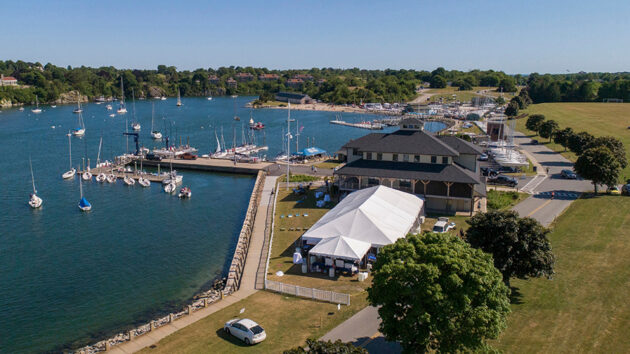
Sail Newport. Photo: Rodrigo Fernandez/Sail Newport 2026
A turnkey takeover?

At present details are still a little thin on the ground – with the promise of more to come shortly. However, while the team carries a new name, the DNA is familiar. In a move that feels less like a fresh start and more like a strategic acquisition of the now-defunct American Magic program, the new syndicate has purchased the previous team’s core assets specifically Patriot: The AC75 yacht that served as American Magic’s primary racing platform and both the American Magic AC40s though how much IP has been acquired alongside these platforms is currently unclear.
The Ken Read Factor

The vision of entrepreneurs Karel Komárek and Chris Welch, American Racing Challenger Team USA, will be led by American yachtsman Ken Read, two-time Rolex Yachtsman of the Year and one of the world’s most accomplished and respected sailors.

If the hardware provides the foundation, the leadership provides the credibility. The appointment of Read as CEO signals that this is a serious sporting endeavour rather than a vanity project. However, even with Read at the helm and a boat already in the shed, the team faces a brutal race against time to be ready.


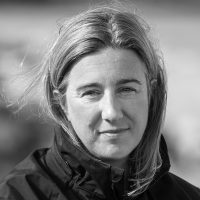
Chris Welch and Karel Komárek Co-Founders of American Racing Challenger Team USA
Race against the clock

Despite significant protocol upheaval and changes to the event, the foundational (and admittedly clichéd) truth in the America’s Cup remains; ‘there is only one thing you can’t buy: time’.

“We’re under no illusion about the challenges ahead,” Read admitted. “We’re fully focused on building a team that can win the Cup.”

With the 38th America’s Cup set to begin in the Bay of Naples in Spring 2027, American Racing has roughly one year to assemble a world-class crew, optimise Patriot to the latest class rules, and match the flight-time of established powerhouses like Emirates Team New Zealand and Luna Rossa Prada Pirelli.

Further details on the official crew roster and technical partnerships are expected in the coming months. For now, American fans can breathe a sigh of relief: the stars and stripes will be foiling in Italy.

The 38th America’s Cup is scheduled to take place in Naples, Italy, starting in the Spring of 2027.


If you enjoyed this….

About The Crown and Canada


About The Crown

Canada is a constitutional monarchy. The Crown in Canada was first established by the kings of France in the sixteenth century. Organized as a royal province of France, both French and British kings and queens have reigned over Canada since 1534. Under Canada's sovereigns, the country has evolved from a French colony to an independent nation.

Canada’s Head of State

In today's constitutional monarchy, His Majesty King Charles III is King of Canada and Canada's Head of State. He is the personal embodiment of the Crown in Canada.

In Canada’s system of government, the power to govern is vested in the Crown but is entrusted to the government to exercise on behalf and in the interest of the people. The Crown reminds the government of the day that the source of the power to govern rests elsewhere and that it is only given to them for a limited duration.

The governor general and lieutenant governors

The governor general and the 10 lieutenant governors represent the Crown in Canada and act on the Monarch’s behalf.

The governor general’s role and responsibilities consist mainly in carrying out many of the duties on behalf of The King. For example, he or she presides over the swearing-in of the prime minister, the Chief Justice of Canada and cabinet ministers. However, there are powers that can only be exercised by The King. The lieutenant governors of the provinces perform similar duties at the provincial level.

The Parliament of Canada

The Parliament of Canada consists of The King, the Senate and the House of Commons. In the provinces, legislatures consist of the lieutenant governor and the elected assembly.

His Majesty's representatives act on the advice of the prime minister or ministers responsible to the House of Commons or the provincial legislative assemblies.

BC Must Stop Blaming First Nations for Old-Growth Logging | The Tyee

BC Must Stop Blaming First Nations for Old-Growth Logging | The Tyee


BC Must Stop Blaming First Nations for Old-Growth Logging
Instead of subsidizing logging, the province should follow experts’ advice and pay nations to conserve forests.

Ben Parfitt TodayThe Tyee

Ben Parfitt is a reporter at The Tyee covering forestry and related issues.Our journalism is supported by readers like you. Click here to support The Tyee.

SHARE:

The province has sought information on how to conserve old-growth forests but has often failed to follow through. Photo via Conservation North.


Listen to this article
9 min


You would be forgiven for thinking that British Columba’s Ministry of Forests is really the Ministry of Logging.

Announcements, Events & more from Tyee and select partners
Hear Rachel Gilmore and More: A Tyee Event on Battling Online Lies

We’re calling it Reality Check LIVE. Get your ticket for May 21 in Vancouver.
The Tyee Is Recruiting Our Next Editor-in-Chief

Founding editor David Beers is passing the baton to a new leader. Is it you?

A recent ministry news release boasts of a 30 per cent increase in timber auctioned, legislative amendments that will result in 17,700 more truckloads of logs coming out of the province’s forests each year, and a new streamlined permitting process that will add another 11,100 truckloads of logs to the mix.

Ravi Parmar, the man overseeing all of this as forests minister, is certainly working hard to meet the mandate given to him by Premier David Eby, one that instructs him to increase logging rates and that sets a numerical target.

But what of old-growth forest conservation, which is also part of Parmar’s mandate? There, Parmar has acted with decidedly less zeal.

‘A moral failure’

In 2021, the provincial government appointed a panel to guide it in protecting more of B.C.’s irreplaceable old-growth forests. The panel delivered a report that recommended 2.6 million hectares of old-growth forests be deferred from logging. But trees have continued to fall, and last month five members of that panel wrote the government, voicing alarm at the province’s lack of progress in conserving British Columbia’s old-growth forests.

The panel members — ecologists Rachel Holt and Karen Price, longtime forester and Tahltan Nation member Garry Merkel, landscape analyst Dave Daust and economist Lisa Matthaus — were blunt.

“Purposely causing extinction is not just a moral failure but also a high economic, ecological and social risk.”

Parmar’s disingenuous response was to say that the lack of progress is effectively beyond the government’s control. The province has referred the proposed deferrals to First Nations and First Nations have rejected half of them, he said.

In an interview with Canadian Press reporter Brenna Owen, Parmar said that the “core” of the province’s old-growth commitments was respecting First Nations’ rights and title and making sure that “they have a seat at the table.”

“We’ve done that,” Parmar said, as if that absolves the government of addressing a biodiversity crisis that it brought into being with its own destructive resource policies.

Parmar’s ministry did indeed refer the old-growth deferral recommendations to First Nations. But those referrals didn’t happen in a vacuum, and therein lies the problem.

Bankrolling logging

For decades, provincial governments have worked diligently to get First Nations more directly involved in logging old-growth and primary forests (forests that have never before been subject to industrial logging activities).

Efforts really took off during Gordon Campbell’s helm as premier in the early 2000s, with the issuance of a raft of new logging licences giving First Nations timber and cash. By 2006, 126 such licences had been awarded.

Since most First Nations — then and now — do not directly own or co-own mills, the trees cut down under those licences ended up being shipped to sawmills owned by a handful of lumber companies that had long ago monopolized the forest industry in B.C. But at least First Nations were being given some stake in profiting from the industrialization of their traditional lands, rather than standing on the sidelines as forests were depleted to the financial benefit of the province and lumber companies alike.

The current government has effectively continued what the BC Liberals started, with Parmar recently announcing that his ministry granted new logging rights to the Fort Nelson First Nation in the remote northeast corner of the province.

Some of the licences awarded under the NDP’s tenure have clearly given the First Nations involved better financial terms than their competitors. In 2022, the McLeod Lake Indian Band logged nearly 180,000 cubic metres of timber under a special permit awarded to the band by the ministry and known as an occupant licence to cut.

A Tyee review of records available on a ministry database shows that the ministry charged the band only 25 cents per cubic metre for the timber cut under the licence. That is the bare minimum “stumpage” fee that logging companies pay the province when they cut down trees on Crown or publicly owned land.

Had the band or the companies to which it sold the logs paid the same as everyone else in northern B.C. who held similar licences that year, the province would have collected over $1 million more in stumpage fees. Those savings meant increased profits for the band.

The provincial government has also entered into revenue-sharing agreements with many First Nations that have had the effect of bankrolling even bigger logging ventures.

In February 2022, the Tsay Keh Dene Nation and the McLeod Lake Indian Band announced that they intended to spend $70 million to buy a forest licence in the Mackenzie region held by Canfor Corp.

Shortly after that, money began pouring into the band and First Nation from the provincial government. A Tyee review of financial statements available on a searchable federal government website shows that provincial funding to Tsay Keh rose from just over $2 million in 2022 to $18 million in 2024. McLeod Lake’s revenues from the province rose from $11 million in 2022 to $55 million in 2024.

Flush with that infusion of cash from the province, the two Indigenous governments ultimately bought Canfor’s forest licence in September 2024, the same year that provincial government contributions to the two Indigenous governments were at their highest levels.

Taxpayers, it could be argued, effectively subsidized a purchase that financially benefited both the First Nation and a forest company that had put thousands of mill workers out of jobs as it shuttered one B.C. mill after another and plowed investment dollars into the U.S. South instead.

Bankrolling conservation?

Parmar and his predecessors have clearly encouraged more logging by First Nations on the grounds that it fosters a long-overdue new relationship with Indigenous Peoples and governments in the province.

But it prompts the question: What meaningful financial assistance has the province offered those First Nations who may wish to conserve forests in their territories or those First Nations who might be persuaded that that is the right and necessary thing to do?

If the provincial government genuinely believes in protecting more irreplaceable old-growth forests — it appointed the panel after all — then what is it doing to make that happen?


The Forest Quietly Removed from BC’s Old-Growth Deferral Listread more

Parmar’s claim that more old growth could be protected if First Nations were of a different mind is an insult to all British Columbians, especially when the government is shovelling money out the door at the same time to facilitate the very logging of those forests.

In their letter, the five panel members pointed out that in lieu of logging, there must be adequate conservation financing or funding to assist First Nations who are affected both by the industrialization of their traditional lands and by conservation decisions.

Such funding “has not been part of the deferral conversation” and its absence “leaves First Nations with no real choice,” the panel’s members told the province. “We ask the province to take responsibility for maintaining these exceptional forests and not place the burden of harvesting decisions entirely on Nations.”

Financially compensating First Nations to conserve lands is not a new idea. In 2019, all provincial members of the legislative assembly voted unanimously in support of the Declaration on the Rights of Indigenous Peoples Act, which became law on Nov. 28, 2019.

Article 29 of the act states:

“Indigenous peoples have the right to the conservation and protection of the environment and the productive capacity of their lands or territories and resources. States shall establish and implement assistance programmes for indigenous peoples for such conservation and protection, without discrimination.”


Why Logging Isn’t the Solution to BC’s Wildfire Crisisread more

Premier Eby has proposed suspending portions of the legislation in response to court rulings, but has backed away from immediate action.

Whether or not Article 29 is among those sections to be suspended remains to be seen. But regardless of what happens, it is clear that all those provincial MLAs to vote in favour of the legislation seven years ago — the current premier among them — believed that First Nations were owed financial compensation to assist in conservation efforts.

In the 155 years since B.C. entered Confederation, governments have collectively taken in hundreds of billions of dollars in “resource rents” from logging, oil and gas, and mining companies.

It’s time some of that money went back to financially compensate those who have paid, and continue to pay, the biggest price as irreplaceable old-growth forests disappear. And that money needs to flow at a rate that is commensurate with or better than the money the government is happily pushing out the door to get First Nations to log instead.


Read more: Indigenous, Labour + Industry, Environment

Democracy lives in the light. Reader support helps us shine.
My career in journalism has been varied and wide-ranging. I’m an author, a documentary maker, a reporter, and my work has sparked four commissions of inquiry in Canada.

My touchstone in journalism has always been getting the truth out -- no matter where it takes me. That has been my rule over a long career that includes ten books and thousands of articles and columns. But every writer needs a platform to get the work in front of the public.

The Tyee is one of the best platforms I have found.

I have been a contributing editor at The Tyee covering federal politics for about a decade now. In an age of corporate control of major media, The Tyee is a dazzling exception. Its publisher and editors care deeply about original journalism. It publishes a stunning array of reporting and analysis from a mix of journalism veterans and talented up-and-comers. And most importantly, it is financially supported by its readers, offering the journalists who work here an outstanding amount of journalistic independence. The independence and originality of our work rests on the generous support of Tyee Builders.

Some say democracy dies in darkness. I prefer to say democracy lives in the light.

Help The Tyee continue to shine a light in all the dark corners and sign up to be a Tyee Builder today.


— Michael Harris, Contributing editorBecome a Tyee Builder today.

Atlantic hurricane season forecast 2026


 Atlantic hurricane season forecast 2026

The Atlantic hurricane season officially begins June 1 with this prediction update coming from AccuWeather:


A developing El Niño will be one of the biggest forces shaping the 2026 Atlantic hurricane season, and is one reason the number of storms could be near to below historical averages. Still, hurricane preparedness is critical as multiple storms could make landfall in the United States this season.

The 2025 hurricane season was close to the historical average in terms of the number of storms, but it featured three Category 5 hurricanes, just one shy of the all-time record of four. Additionally, most of the tropical activity occurred after Sept. 10, the climatological peak of the hurricane season.

“It’s very important that everybody from South Texas all the way to Maine prepares equally for each and every hurricane season, regardless of what the official forecast is,” AccuWeather Lead Hurricane Expert Alex DaSilva said. “Even if it’s expected to be a slightly below average hurricane season, we can still see major hits across the United States.” – Full report

Louis an eatery with long history finally opens location in Rock Forest

Eatery with long history finally opens location in Rock Forest


Sherbrooke Record · 6 days ago
by Matthew Mccully · News


Louis Restaurants, a Sherbrooke institution, reflects a little history in its new digs

Michael Keegan
The Record – LJI

The Louis Restaurant chain, a Sherbrooke institution, inaugurated a new location in the Rock-Forest area of Sherbrooke on March 30. It’s the business’s fourth restaurant and the first west of Autoroute 410, easy to find beneath the two huge, white water towers that are landmarks on Blvd. Bourque.

In a press release, the chain said the opening in Rock-Forest was long anticipated. The quickly filling parking lot and the growing line inside appeared to confirm this. The organization’s general manager, Christian Frechette, didn’t have time to speak to The Record, busy as he was prepping orders under the heat lamps behind the counter. He only had enough time to smile for a photograph.

Waiting in line to order at 11:45 a.m. just 45 minutes after the restaurant opened its doors for the first time, Émilie Thibault said, “It’s been years” that she’s been waiting for a Louis to open in the Rock-Forest neighbourhood. She said the place brings back fond memories for her of eating there when she was a child.

Indeed, the business has a long history in Sherbrooke. The first Louis Luncheonette opened in 1949. Seated at one of the tables wearing a Louis baseball cap was Normand Bérard, who said he left school at the age of 14 and started working for the company in 1957-58, cleaning windows, counters and bathrooms, for 15 or 20 hours a week, at 55 cents an hour.

In French, Bérard said he worked for the business for 61 years and three months and worked for only three different owners over that time. He said that what kept it successful when other restaurants came and went, was simple: “The quality of the food, and the personnel. Bonjour madame, bonjour monsieur. Always clean, always sharp.”

Obituary: Ted Turner, America's Cup icon and founder of CNN (1938-2026)

Obituary: Ted Turner, America's Cup icon and founder of CNN (1938-2026)

Obituary: Ted Turner, America’s Cup icon and founder of CNN (1938-2026)

Helen Fretter
May 7, 2026
0shares


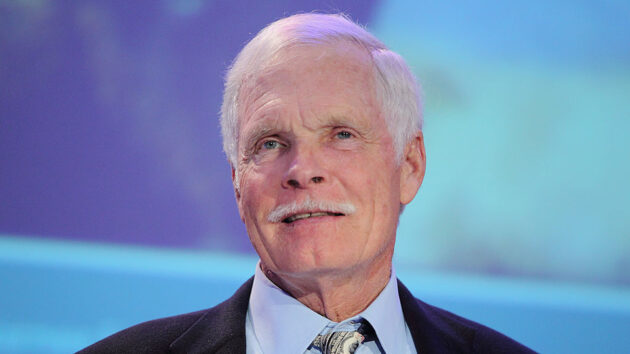
Ted Turner has passed away at age 87. The CNN founder was also an America's Cup victor, a four-time winner of the Rolex Yachtsman of the Year award, and a colourful character in American yacht racing

TAGS:


One of the biggest characters in yacht racing – and particularly the America’s Cup – Ted Turner, has died aged 87.

Robert ‘Ted’ Edward Turner III was born on November 19, 1938 in Ohio, USA, and spent his childhood sailing in Savannah, in the Southern state of Georgia, going on to win class championships in the Flying Dutchman amongst others.

After military school he headed to Brown University, where he represented the Ivy League institution in sailing, but was expelled for being caught with a female guest in his dorm room.

He joined his family business, Turner Communications, which specialised in advertising hoardings, as an account executive. But his father took his own life shortly after, and Turner III took over as the company’s president.

The young Turner swiftly proved to have an aptitude for the media business, diversifying the company into radio, television, and sports, with enormous success.


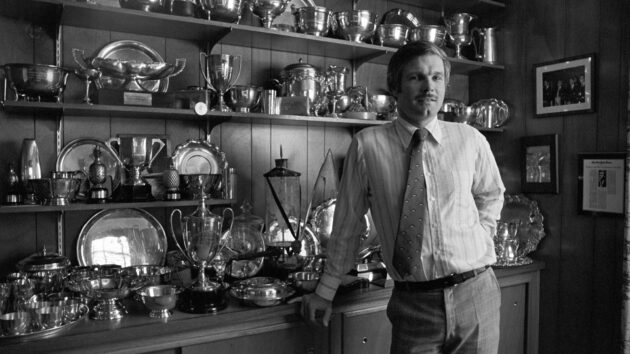
Ted Turner photographed with sailing trophies in his office at Turner Broadcasting System. Credit: Tom Hill via Getty

In 1964, aged 26, Turner trialled for the US Olympic Team in the Flying Dutchman class, but was not selected to represent USA at the Tokyo Games.

However, he won the Flying Dutchman World Championships the following year, and also won the 5.5-Metre Worlds in 1970.

He then moved into big boat racing and bought the 12-Metre American Eagle in 1969. American Eagle was designed for the 1964 America’s Cup, but Turner had it converted to IOR racing.

After competing in SORC races and the Annapolis-Newport Race, it sailed across the Atlantic on its own bottom to race in the Fastnet Race.

Officially a ‘reserve’ for the US Admiral’s Cup team that year, Turner skippered American Eagle to win line honours and set a monohull race record time in the 608-mile offshore race in 1971.

He then shipped the boat to Australia and won the 1972 Sydney Hobart Race on both line honours and handicap.

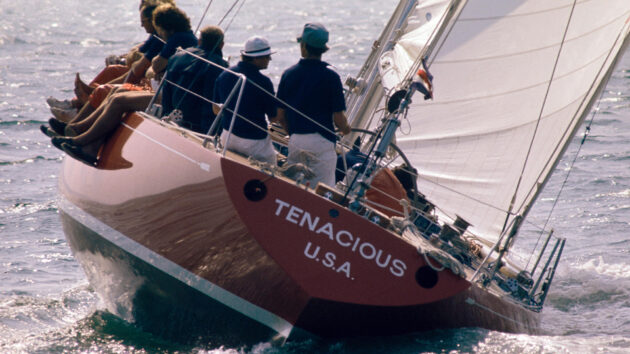
Turner went on to win both races again. He won the tragic 1979 Fastnet Race in his own 61-footer Tenacious.

He is quoted as saying during the race: “Looks like there’s some heavy weather coming. Put up all the canvas, we’ll let God take it down.”


He also won line honours in the 1983 Sydney Hobart as skipper of the Maxi yacht Condor.

His sailing successes led to him skippering the Challenger Mariner for the 1974 America’s Cup Defense Trials, but Mariner – which had a radical hull design – was swiftly knocked out, and Turner was dismissed.

Describing the boat, Turner famously noted that ‘even a turd is pointed at both ends’.


Determined to get to the Cup, Turner partnered with sailmaker Ted Hood of the rival Courageous syndicate, which had won the 1974 Cup, with Turner appointed as Courageous’s skipper for the 1977 defence.


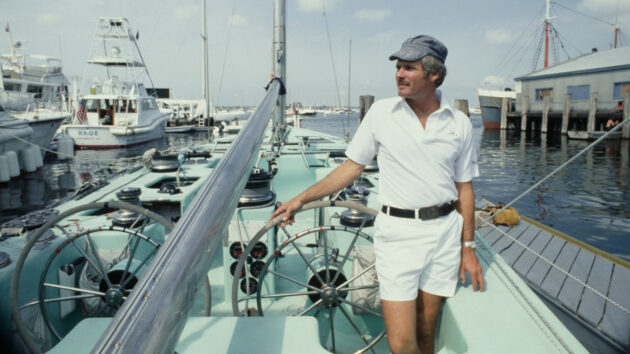
The American yacht ‘Courageous’, captained by Ted Turner, sailing at Newport during selection trials for the America’s Cup, Rhode Island, August 9th 1977. Credit: UPI / Bettmann Archive via Getty Images

In 1977 Courageous and Turner won first the US America’s Cup trials – for which Cup reporter Bob Fisher gave him the moniker of “Captain Courageous” when he came from behind to defeat the newer 12-Metre Independence, skippered by Hood, and Lowell North on the much fancied Enterprise.

He then successfully defended the Cup in the Match against the challenger Australia, winning 4-0, and celebrated famously.
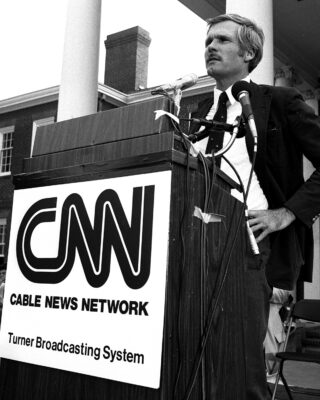
He was a four-time winner of the Rolex Yachtsman of the Year award, and is thought to have won over 500 major sailing trophies.

Turner at the official CNN Launch event at CNN Techwood Drive World Headquarters in Atlanta Georgia, June 01, 1980. Credit: Rick Diamond via Getty Images

Success on the water was mirrored in his business life, with Turner founding the CNN news network in 1980.

CNN became a leader in breaking international news, covering seismic events such as the protests in Tiananmen Square, the fall of the Berlin Wall, and the Gulf War in Iraq.

Turner was named Time magazine’s “Man of the Year” for CNN’s groundbreaking coverage in 1991. He later bought the MGM film library for $1.6bn, and created the Cartoon Network, before selling his multi-billion-dollar business in the Time Warner merger.

A passionate environmentalist, Turner was a major charity donor and passionate about sustainable development – much of it on his own land, and until 2010 he was the largest private landowner in the USA.

He gave $1 billion to create the United Nations Foundation charity, and lobbied to reduce the global proliferation of nuclear, chemical, and biological weapons.

He created the ‘Goodwill Games’, after several Olympic Games in the 1980s were impacted by political boycotts, and invested heavily in various sports including baseball and wrestling.

Turner is reported to have had a long-running feud with fellow media magnate Rupert Murdoch – which founded, not in a ratings war, but when a Murdoch-sponsored yacht collided with Condor during the 1983 Sydney to Hobart Race.

Condor ran aground but held the race line honours win after protest. At a boozy post-race dinner, Turner and Murdoch exchanged heated words – legend has it that Turner later challenged Murdoch to a televised fistfight in Las Vegas.


Outspoken and at times controversial, he was variously nicknamed ‘The Mouth of the South’ and ‘Captain Outrageous’, though the latter often applied to his ability to snatch victory from the jaws of defeat on the water.

His private life was also at times in the headlines: he married three times – the third time to actor Jane Fonda.

He is survived by his five children, 14 grandchildren and two great-grandchildren.

City guides

Author: R.G.Richardson This is a live interactive search guidebook with 12,300 presets that searches for everything about your city. Pick and click on the icon, never goes out of date! You can search for events, restaurants, banks, hotels, shopping, apartments and sports. Find everything that is happening in the city! In the guide book, you look in the index of what you want to search and then you click on the button next to it and you instantly have your search items displayed. All guides search in 10 languages.